I’ve spent a lot of time around stages. Some of it on them; I’ve performed a few hundred shows as a musician and given professional talks a dozen or so times. But I’ve also selected and coached speakers for 5 conferences over the last 10 years. And I’ve learned a few things. Key among them is this:
smart person ≠ great speaker
Not by default, at least. But a lot of times we stick smart people on stage and expect them to blow minds and deliver great results. Which brings us to our second, perhaps more surprising point:
great speaker ≠ effective teacher
If the goal of the event is to entertain and wow people, then being a great speaker will work out fine for you. But if the goal of the event is to teach people things, then you need to be an effective teacher as well as a great speaker.
The number one complaint I’ve seen about conferences (aside from temperature) is that there weren’t enough practical talks. People will come back and buy tickets again (or buy your book, if you’re the speaker) if you teach them something. Simply wow-ing them probably isn’t enough.
Ideally, you leave people wowed, their minds expanded, and their skills improved.
Based on my speaking experiences and coaching around a hundred speakers, I’ve developed the following system for developing a great talk.
PUFF:
Practiced
Unflappable
Framed
Focused
We’re going to go through it backwards. (Why? Because FFUP is not nearly as good an acronym).
Focused

Have a Thesis
So you want to do a talk about marketing. Are you Gary Vaynerchuk? Or Jay Baer? No? Then why would people care to listen to your talk on marketing? Why wouldn’t they just go to a conference where Gary or Jay are speaking? Or go online and watch a talk from one of the experts?
The key to a great talk is focus. You should have a thesis. Share something that hasn’t been shared before. Share something unique. Share something personal. Share something that will catch the eye.
Look at the titles of some of the talks I’ve done:
“Everyone’s Customers Are Wrong and Their Data Is Lying”
“Community Management ROI in 20 Minutes”
“Critical Issue Escalation: Our Process”
“Cultivating Your Community Garden”
These aren’t generic. They’re focused, sometimes surprising, and generally clear about what they’re going to teach you. I’m not Gary Vaynerchuk, so I can’t just go up on stage and wax on “community”. I have to focus.
So what are you passionate about? What do you uniquely know? What topic have you not seen represented at other conferences? These questions will help you find your focus. Nobody comes to a conference for a 101 “intro to” talk – they can find those resources online. They come for your unique, well-delivered perspective.
Drop Everything Extraneous
Inevitably, you’ll be collecting thoughts and come across a great story or lesson or idea that is extraneous to your thesis. Drop it. Period.
The problem with this information is that it’s not a bonus feature. It’s a distraction. It makes people wonder how it relates to the thesis or if they’re missing something or if you are missing something. It’s not worth including.
Personally, I like to write down everything I know related to my thesis in very simple form and then cut out the things that don’t seem to fit. Recently I did this with sticky notes and it gave me an even more visual way to keep things focused.
Trying a different approach to constructing a talk. Digging it so far. pic.twitter.com/EdiCs7gLXr
— Evan Hamilton (@evanhamilton) January 13, 2017
Have Your Audience in Mind
It doesn’t matter how amazing your talk is if it isn’t helping your audience. What do you know about them? What can the event organizer tell you? What might they already know? What do they want to know? Ask all these questions as you figure out where to put your focus.
Framed

Repeatability
A great talk isn’t worth anything if the audience can’t remember and repeat it. You are trying to make them come away feeling smarter. Your goal should be to communicate your thesis so clearly that the audience can explain it to their mom.
This is very different from simply communicating the concept – this is about framing in a way that people can understand, repeat, and apply.
Framing Tools
Framing tools are key here; it’s hard for most of us to absorb a bunch of words. Books have chapters, titles, paragraphs, emphasis, etc so that they’re more absorbable. For your presentation, you’ll want to heavily uses frames like charts, images, acronyms (PUFF, anyone?), and the like.
Some of my favorite framing devices I encountered during my time at CMX:

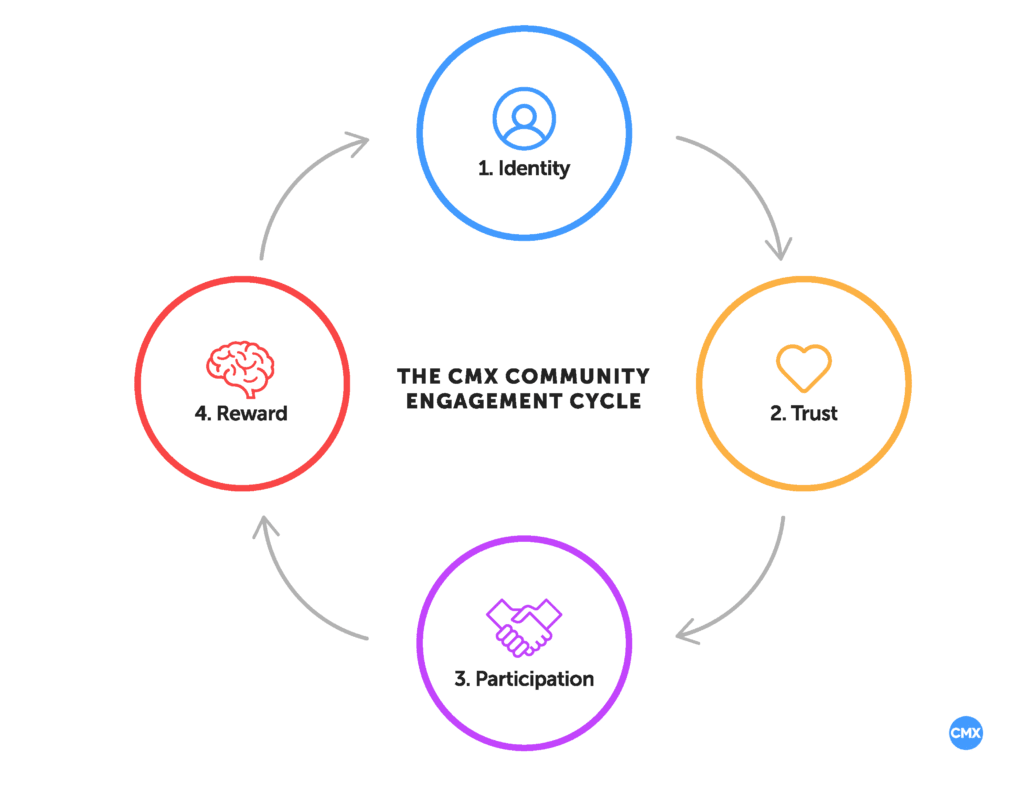
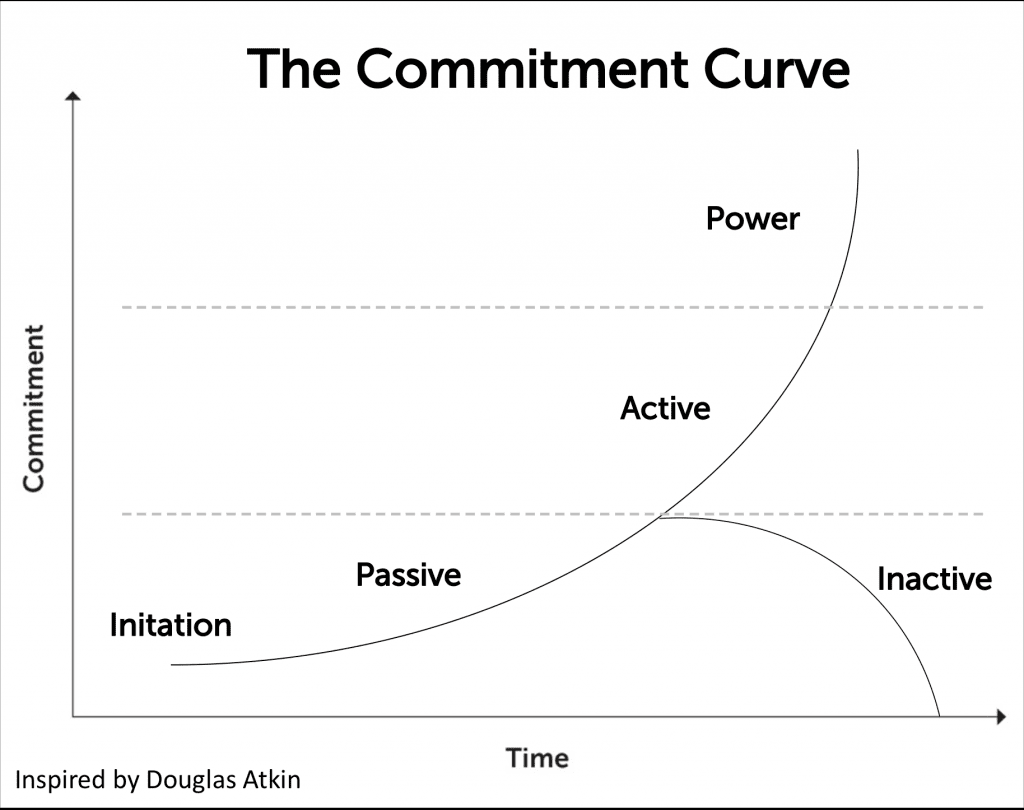

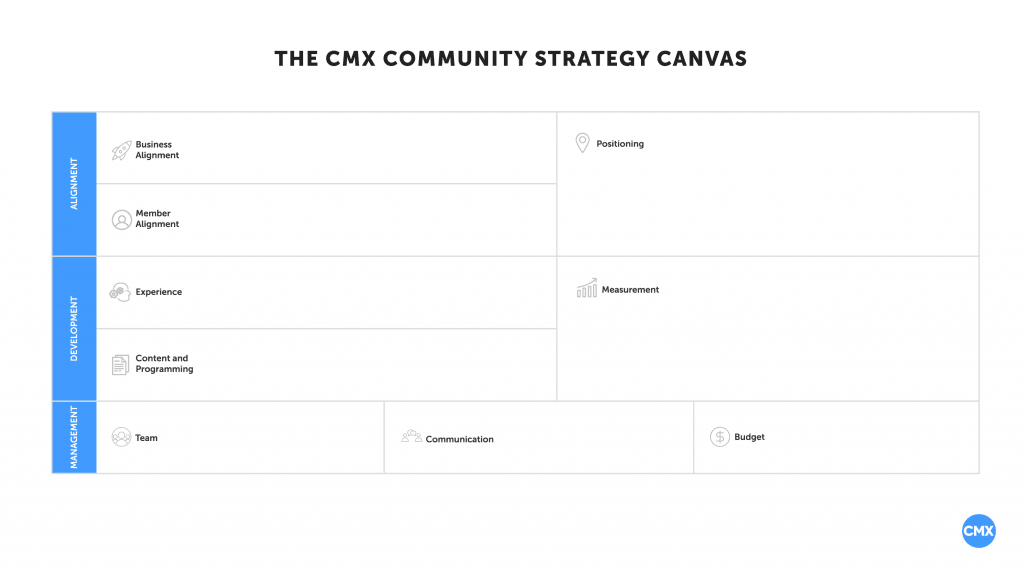
Although some framing tools can be more effective than others, any sort of frame will be better than simply explaining the concept.
Exercises
The best way to ensure your audience is actually retaining the knowledge you’re sharing is by leading exercises. This might not always be completely possible in a conference setting, but there are a lot of ways you can handle this (in order of increasing complexity);
- Asking the audience to repeat a concept you shared (“So, what is PUFF again?”)
- Asking an audience member to answer a question using what you just taught them (“Choosing your thesis is part of which section of PUFF?”)
- Asking the audience for examples (“What are some examples of framing devices you’ve seen used in a talk?”)
- Splitting the audience into groups and having them do the first step of the lesson you’re teaching them (“Take this concept and develop a frame for it”)
It’s important for these sort of projects that you don’t try to have them complete every step of your program/concept – give them an initial step that helps them understand and feel confident about the subject.
Unflappable

Physically Prepared
Presenting can be nerve-wracking. I’ve been on stage many, many times and I can still get nervous. The first step to avoiding this is preparing your body.
One way to do this is develop a ritual that helps you feel more confident. For some people this might be blasting a Beyoncé song. For others it might be doing some jumping jacks. For others it might be deep breaths.
That said, it’s important to remember that stress is actually good for you. It’s your body preparing for action, so don’t stress out when you feel your heart rate increase. It’ll pass once you’re in the groove, so just thank your body and let the adrenaline flow.
Mentally Prepared
Unflappable doesn’t mean inflexible. So you need to be prepared for curveballs, because they will come. And there’s nothing worse than delivering a great talk and then getting skewered in the Q&A. (It’s definitely happened to me!)
Do your presentation for coworkers. Do it for friends. Do it for your mom. Then see what questions they have. You have the Curse of Knowledge. They don’t know what you know, so they’ll undoubtably show you where the gaps in your presentation are or what questions you need to be prepared to answer during Q&A.
Still nervous? Picture the experience. The most nerve-wracking thing is something unexpected, so look at pictures of the stage, find out where the screen is going to be, find out if there’s a slide remote (and get one if they don’t have one) – eliminate all the unknowns you can.
Starting Strong
All the prep in the world won’t help if you start your presentation badly. So prepare yourself for a strong start.
The way you present yourself before you share any information will color how people accept that information. You don’t want to wander on to the stage, staring at the ground, loudly clearing your throat and shuffling through messy handheld notes, and then dive into your presentation without saying hello.
Be confident, whatever that means to you. It might be impossible for you to bound onstage with smiles and handshakes like some speakers. If that’s not you, don’t do it. I like to throw out a goofy joke (something self-deprecating or ridiculous). For you, maybe it’s actually nervous excitement – channeling this into an intentional style is better than awkwardly fighting it. I love Liz Milch’s fun, goofy intro in this CMX Summit talk.
Context is crucial. You need to ensure that your audience understands exactly what it is you’re going to be teaching them. Otherwise, the experience will be like wandering into a biology class in college halfway into the lecture: confusing and pointless.
Stick with that old gem: tell them what you’re going to tell them, tell them, then tell them what you told them. Just like in advertising, the more you repeat, the more likely they’ll remember it.
Set the stage for why people should be listening to you. This doesn’t mean 5 minutes of your bio (please don’t do that), but means touching on your relevant experience and perspective. That latter point is important. Unless you have a really impressive resume, you need to convince them that you are going to be relevant to speak about this topic. So that might be “I’ve been fascinated by this topic and taking notes on it for years” or “I had this special opportunity to discover this unique take”.
You can also drop examples from your work into the lessons you’re teaching, further emphasizing that you actually know this stuff and aren’t making it up.
Lastly, don’t let this section scare you! Screw-ups are ok, and they happen to everyone. Most speakers are nervous. It’s how you handle nervousness, or errors, or unexpected curveballs. If you screw up, move on very quickly or laugh at yourself. Don’t apologize – you’re just making an awkward moment more awkward. If you’re not super-confident onstage, don’t try to overdo it – just make your flaws an endearing part of your presentation. If something breaks, don’t complain about it or point it out, just roll with it.
Practiced

Actual Practice
“Duh, Evan. Of course I need to practice.”
Sure, but there’s practice and then there’s actual practice. Mouthing your talk while flipping through slides on the train is not actual practice.
Instead, you should stand up, speak loudly, hide your speaker notes, and practice as if you were on stage. Then record video of it, and watch it. Then do it again. Yep, it’s gonna be painful.
When you actually practice you’ll suddenly realize sections you added are way too wordy. You’ll realize you don’t know what to do with your hands. Or that you’re staring at the floor. Or that your talk is 10 minutes longer or shorter than it needs to be!
Memorize Beats, Not Lines
One of my favorite speaking tips comes from The Moth. It’s pretty simple: if you memorize (or worse yet, read) lines on stage, you’ll have very little energy and won’t connect with the audience. In a professional setting, it also comes across as a lack of knowledge about the subject. (If you know it, why do you have to memorize the exact lines or read off a piece of paper?) Instead, memorize the beats.
This has an added advantage if you run into any issues. If technical issues crop up, you can continue without your slides. If something unexpected happens (someone drops something loud in the back of the room, you drop the mic, etc), you don’t have to remember exactly what line you were on.
I have a painful, distinct memory of a talk a number of years ago where the presentation computer kept auto-advancing my slides. In fact, you can watch it. I am incredibly awkward until, finally, they just turn off the slides. And then? Suddenly, I’m confident and knowledgable. I had memorized the beats…I was just relying too much on the slides. Your slides should supplement the beats that you know by heart.
Most people think they can’t speak professionally. They have a lot of arguments: I’m not as knowledgable as those people on stage, I’m not as charismatic, I’m not experienced in teaching, I don’t have fancy graphs, etc.
This is all surmountable.
You have some unique thesis that nobody else can present as well as you.
You have your own style you can embrace and polish.
You can frame your learnings with something as simple as an acronym.
You can become a great presenter. You just have to work hard, believe in yourself, and PUFF.