For years, designers have been talking about making things “frictionless”. And for good reason: the web was full of a lot of friction. Signup flows were labyrinthine, uploading and storing files was a hassle, and let’s not even talk about sites that didn’t work on mobile.
But in community design, friction is coming into vogue. Why? Because making it frictionless to say the first thing on your mind can often be a bad thing.
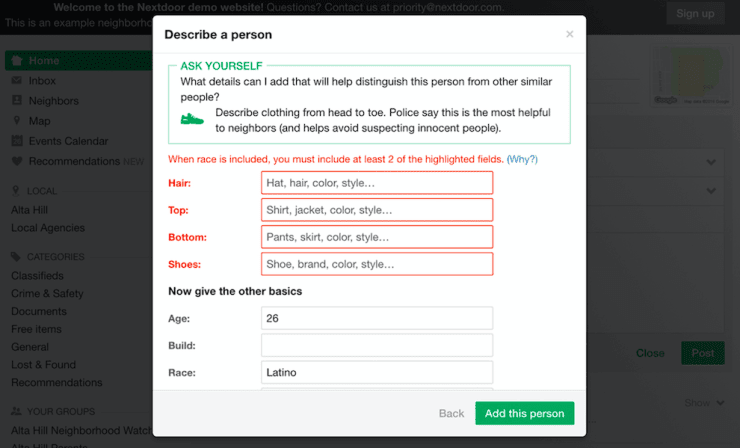
One of the biggest recent examples of this is Nextdoor‘s racial profiling problem. Nextdoor allows members of a neighborhood to create an online community where they can talk about things happening in their neighborhood, trade items, and report crime and safety issues. And that last area is where the problems arose, because people with implicit biases started posting things like concerns about “‘light-skinned black female’ walking her dog and talking on her cellphone” and following up with horrifying comments like “I don’t recognize her. Has anyone described any suspect of crime like her?”
Often, these “suspicious characters” were simply neighbors who wouldn’t have been called out if not for the color of their skin. The posts were offensive, reinforced racial stereotypes, and also made it hard for police to sort out posts talking about actual crime.
Generally, community platforms try to deal with this by having clear guidelines and taking action after an offensive post goes up. But guidelines are often easily ignored, and taking a post down doesn’t lessen the negative impact it had. The most effective way to affect biased behavior like this is to add friction to make people stop and think while they’re taking an action.
Nextdoor has done an amazing job addressing this. As soon as you mention race in a Crime & Safety post, you are required to list additional, non-racial attributes. This, they explain, creates “decision points to get people to stop and think as they’re observing people to cut down on implicit bias.” The result? Racial profiling posts have dropped by 75%.
Nextdoor isn’t new to friction. They require those launching neighborhoods on the platform to recruit a certain number of members in a certain period of time, and all members must prove residence. This means many neighborhoods never get off the ground…but also means they avoid empty, inactive communities that would make their service look bad. Stack Exchange does the same thing with new sites on their networks, requiring them to amass a certain amount of activity before they’re publicly launched.
Discourse and Product Hunt boldly put friction at the very start of their experience. You previously couldn’t comment on Product Hunt without an invite from an existing member, and the Discourse community platform allows you to set certain achievements (number of votes, number of comments, etc) that a member must hit before they can take greater actions. Over at Reddit, we don’t allow you to create a subreddit unless your account has a minimum level of karma and is at least 30 days old.
It’s exciting to see community design start to step away from traditional (and generally sales-based) design. Too long community professionals have labored within inflexible platforms and struggled to react to issues rather than prevent them. Once we start putting thought into where we create or remove friction, we can build communities that are more successful, productive, and civil.
Full disclosure: I consulted for Nextdoor from 2015-2016, but did not work on the project(s) listed above.
For the last two years or so, I’ve been playing with a prioritization trick I picked up somewhere: choose 3 top priorities (I’ve seen and used this both in a weekly and daily context), and don’t do anything else until you have done those.
It’s been reasonably successful, until now. Now, it is very successful. Why? Because now I have 2-7 weeks until my child is born and I take weeks of paternity leave. So literally, I may only have two weeks to finish whatever I’m going to do this quarter and develop my plan for the next. Suddenly, the idea of only accomplishing top tasks is not simply academic. It’s very, very literal.
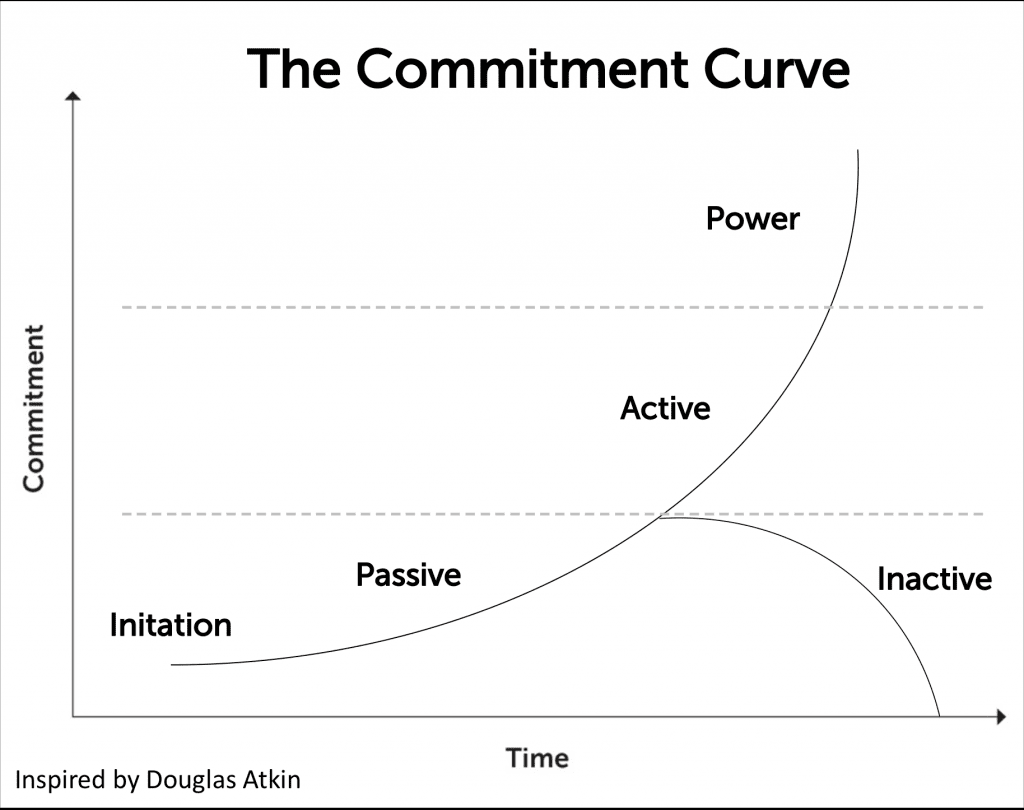
This has made things that I thought were important seem pointless. If I got these done in the next two weeks and then took leave, it wouldn’t really matter. Sure, I want to review employee engagement results with my team…but that pales in comparison to addressing the overwork a few of them are dealing with. Sure, we need to map out a commitment curve for our community…but not more than I need to send out our monthly communication with them. Sure, I want to create an orientation doc for new hires…but if I don’t get those hires approved it won’t matter.
Certainly, those things still should probably get done. Some, like the onboarding, I clearly must delegate. Some, like the commitment curve, will hopefully bubble back up if they’re important (and I should probably schedule some time when I return to mull on big ideas like this). Some, like the survey results, just won’t happen. And it won’t ruin anything.
I have found myself incredibly productive and engaged knowing that I have two weeks to accomplish these things, and these are the things, and nothing else are the things. It’s an attitude I hope to bring back with me once I return to work. The new most important thing will be my kid, so prioritization will be more important than ever.
For years the picture painted of trolls was pretty straightforward: while most members of online communities are good people, there are a few horrible, unchangeable, malicious people called “trolls” who live to make everyone’s life terrible. Our job was to try to keep them out, ban them when they showed up, and sigh and accept that they were an inevitable part of any online community.
What has become clear is that we were wrong; most trolls are regular people.
Two recently released studies have shown that the majority of “troll” behavior is actually generated by normal people who have been triggered into acting negatively, usually through a combination of their own mental state (i.e. having a bad day) and social norms (e.g. seeing other people troll and get away with it).
The famously toxic League of Legends found that only about 1% of their players were consistently toxic, and those produced only about 5% of the toxicity. “The vast majority was from the average person just having a bad day.”
Scientists from Cornell and Stanford found that people are more likely to troll if they were in a negative mood, late at night, and if the first comment on a thread was a “troll comment”.
This is a game-changer for several reasons.
One, it means we may have been banning or punishing a large number of normal people who were just doing what they saw others doing. It’s likely that we only reinforced their negative behavior, rather than helping them adjust it.
Two, it means there’s a lot more we can do to prevent trolling. A recent experiment on Reddit found that rule posts stuck to the top of a thread increased rule following by 7.3 percentage points and increased newcomer participation by 38.1%. League of Legends found that some simple priming “reduced negative attitudes by 8.3%, verbal abuse by 6.2% and offensive language by 11%”. Some people are further down the rabbit hole of negativity, but even they may be saved.We are not helpless to decrease trolling, and continuing to act like we are is irresponsible.
Three, it means community managers are even more important in any organization that has an interactive online space. We are no longer just reactive janitors, apologizing for the mess. We can be proactive social designers. (Be sure to go seek out some behavioral psychology books and classes, folks.)
To me, this is extremely exciting. It means our online communities can become more positive, safe places. And it means that our work is far from done. Complacency happens in every industry. The community industry has finally started pushing through our complacency about ROI. Next, let’s tackle trolling.
It’s important that I note that these findings don’t mean there aren’t real, horrible people on the internet. It doesn’t mean we need to put up with harassment just because someone had a bad day. I’m not condoning bad behavior – I’m just optimistic that we can change much of it.
These days, it’s rare to hear anything but awe when community managers talk about Slack. The common consensus seems to be that Slack is the perfect community platform. This overexcitement worries me because a) it’s not and b) different communities require different types of platforms.
Don’t get me wrong: I love Slack. I think it’s a fantastic tool for company communication (especially for companies with more than one office) and it can be a good tool for community. Let’s explore the pros and cons without the rose-colored glasses on.
Pros
Synchronous Activity Drives Engagement
Usually the biggest health metric community professionals are looking at is engagement: how much are members interacting with each other? And when you put people in a space at the exact same time, engagement increases. This is the reason meetups and conferences are such powerful experiences and why it can be harder to drive engagement on asynchronous forums. The #1 reason most community professionals like Slack for community is the live chat drives significant engagement.
Many People Know How to Use It
Any time you introduce people to a community, you have to deal with the learning curve for the platform. This is why so many communities are built in Facebook Groups, despite even more significant drawbacks; everyone knows how to use Facebook. The same is quickly becoming true of Slack. Many organizations use Slack, so for many, a Slack community doesn’t involve any learning curve.
The Opportunities for Onboarding are Excellent
Getting new community members to add a profile photo, introduce themselves, or read the community guidelines can be hard. Very few people look at intro threads or sidebar guidelines. Even an email onboarding campaign has to compete with all the other emails in your inbox. Slack, on the other hand, has demonstrated how live chat bots can drastically improve onboarding uptake. This is a huge boon for community professionals.
Cons
Synchronicity Leaves Out Some Populations
If you have an international community, putting them on Slack immediately decreases the likelihood that people from different time zones will interact, because Slack is all about in the moment.
FOMO Can Drive Disengagement
Fear Of Missing Out (FOMO) is often a strong tool for communities. You log in to see what happened while you were gone and add your contributions. But because Slack rewards being active in the moment, it favors those who have the time, attention, and professional setting where they can sit on Slack all day. And because the synchronicity drives significant engagement, returning to “check in” once a day can be overwhelming. In order to create a truly engaged community, you need to create a shared experience. I’ve disengaged from several very interesting Slack groups simply because I can’t be on them very often and returning to catch up is an unpleasant task that doesn’t make me feel part of the group.
Lack of Scannability
On top of that, it’s much harder to scan a train-of-thought Slack discussion than it is to scan a list of distinct topics in a forum. (The new threaded replies may help some, but don’t solve the problem entirely.) This also makes it hard to point others to useful discussions at a later time.
No SEO
For many companies, the search engine optimization benefits of their community are huge, driving new membership, deflecting potential support tickets, and even converting customers. Slack conversations don’t show up in search engine results.
Separate From Your Site
Whether for branding purposes, consistency, or simple navigation, it can be beneficial to have your community embedded into your site. Slack is a separate space.
Again, this is not a hit piece on Slack. Slack is a fantastic tool and can be great for some communities. But it’s dangerous for us to talk about the pros of any platform without discussing the cons. Choosing a community platform is about making the right choice for your community and company.
So, if you don’t need SEO benefits, have a relatively small group of people who are at a computer all day, able to chat, and in the same time zone, Slack could be perfect for you. If you have an international audience that can only check in online occasionally and your business needs relevant conversations to show up in search results and be easily retrievable, Slack’s probably not the right choice. Write down your must-haves and see where Slack and the many other platforms out there fit.
I’ve spent a lot of time around stages. Some of it on them; I’ve performed a few hundred shows as a musician and given professional talks a dozen or so times. But I’ve also selected and coached speakers for 5 conferences over the last 10 years. And I’ve learned a few things. Key among them is this:
smart person ≠ great speaker
Not by default, at least. But a lot of times we stick smart people on stage and expect them to blow minds and deliver great results. Which brings us to our second, perhaps more surprising point:
great speaker ≠ effective teacher
If the goal of the event is to entertain and wow people, then being a great speaker will work out fine for you. But if the goal of the event is to teach people things, then you need to be an effective teacher as well as a great speaker.
The number one complaint I’ve seen about conferences (aside from temperature) is that there weren’t enough practical talks. People will come back and buy tickets again (or buy your book, if you’re the speaker) if you teach them something. Simply wow-ing them probably isn’t enough.
Ideally, you leave people wowed, their minds expanded, and their skills improved.
Based on my speaking experiences and coaching around a hundred speakers, I’ve developed the following system for developing a great talk.
PUFF:
Practiced
Unflappable
Framed
Focused
We’re going to go through it backwards. (Why? Because FFUP is not nearly as good an acronym).
Focused
Have a Thesis
So you want to do a talk about marketing. Are you Gary Vaynerchuk? Or Jay Baer? No? Then why would people care to listen to your talk on marketing? Why wouldn’t they just go to a conference where Gary or Jay are speaking? Or go online and watch a talk from one of the experts?
The key to a great talk is focus. You should have a thesis. Share something that hasn’t been shared before. Share something unique. Share something personal. Share something that will catch the eye.
Look at the titles of some of the talks I’ve done:
“Everyone’s Customers Are Wrong and Their Data Is Lying”
“Community Management ROI in 20 Minutes”
“Critical Issue Escalation: Our Process”
“Cultivating Your Community Garden”
These aren’t generic. They’re focused, sometimes surprising, and generally clear about what they’re going to teach you. I’m not Gary Vaynerchuk, so I can’t just go up on stage and wax on “community”. I have to focus.
So what are you passionate about? What do you uniquely know? What topic have you not seen represented at other conferences? These questions will help you find your focus. Nobody comes to a conference for a 101 “intro to” talk – they can find those resources online. They come for your unique, well-delivered perspective.
Drop Everything Extraneous
Inevitably, you’ll be collecting thoughts and come across a great story or lesson or idea that is extraneous to your thesis. Drop it. Period.
The problem with this information is that it’s not a bonus feature. It’s a distraction. It makes people wonder how it relates to the thesis or if they’re missing something or if you are missing something. It’s not worth including.
Personally, I like to write down everything I know related to my thesis in very simple form and then cut out the things that don’t seem to fit. Recently I did this with sticky notes and it gave me an even more visual way to keep things focused.
It doesn’t matter how amazing your talk is if it isn’t helping your audience. What do you know about them? What can the event organizer tell you? What might they already know? What do they want to know? Ask all these questions as you figure out where to put your focus.
Framed
Repeatability
A great talk isn’t worth anything if the audience can’t remember and repeat it. You are trying to make them come away feeling smarter. Your goal should be to communicate your thesis so clearly that the audience can explain it to their mom.
This is very different from simply communicating the concept – this is about framing in a way that people can understand, repeat, and apply.
Framing Tools
Framing tools are key here; it’s hard for most of us to absorb a bunch of words. Books have chapters, titles, paragraphs, emphasis, etc so that they’re more absorbable. For your presentation, you’ll want to heavily uses frames like charts, images, acronyms (PUFF, anyone?), and the like.
Some of my favorite framing devices I encountered during my time at CMX:
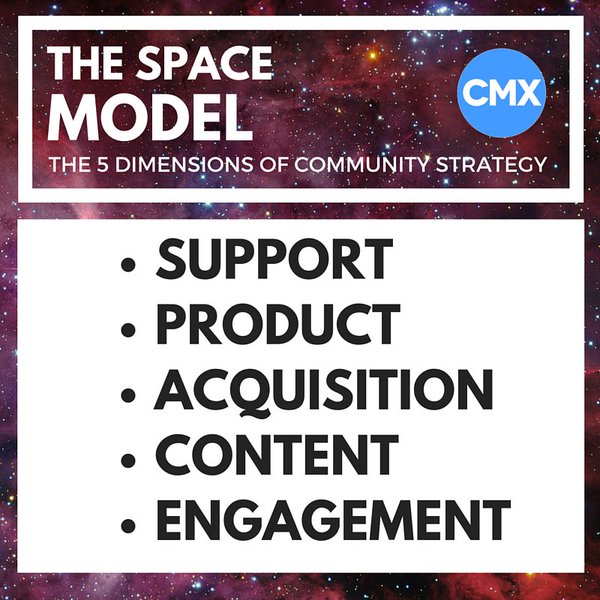
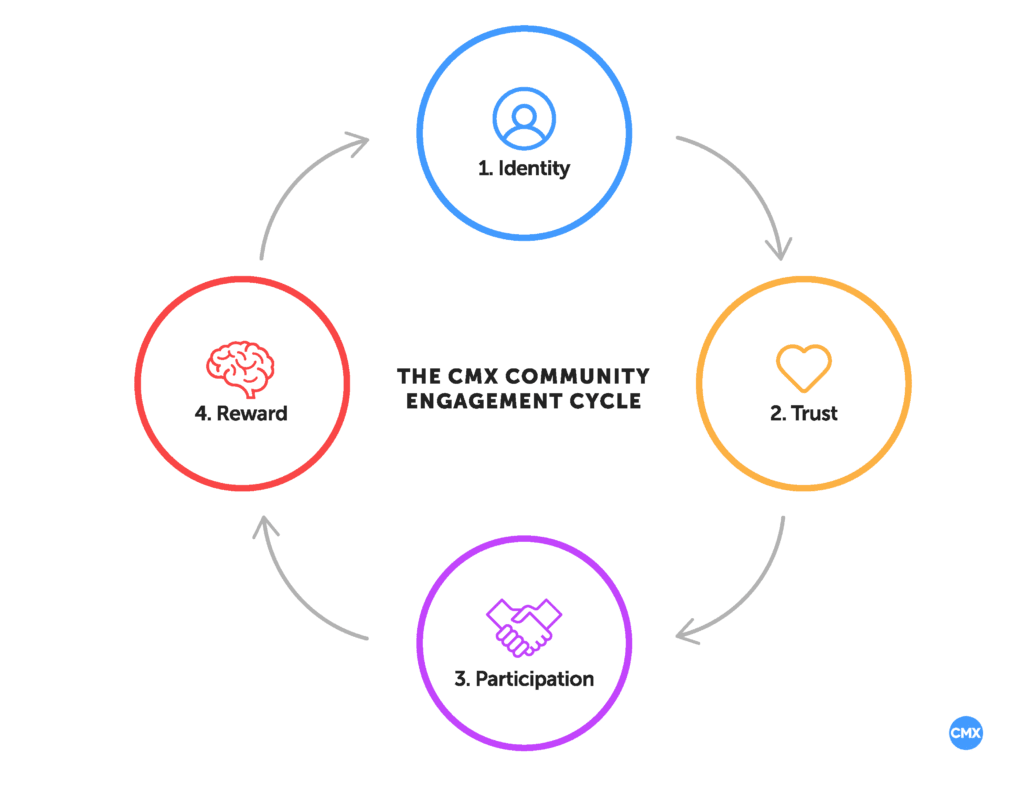
SPACE is both a memorable acronym but also a descriptive one that allows for visuals to enhance your memory of it.The Community Engagement Cycle is something you can easily sketch on a piece of paper, making it an invaluable tool to walk away from a workshop with. Plus the icons help you immediately understand each phase.The Commitment Curve isn’t so much revolutionary as a great way to visualize something that you may already roughly understand. I’ve landed consulting gigs almost purely on showing them this – it makes the concept of community concrete.
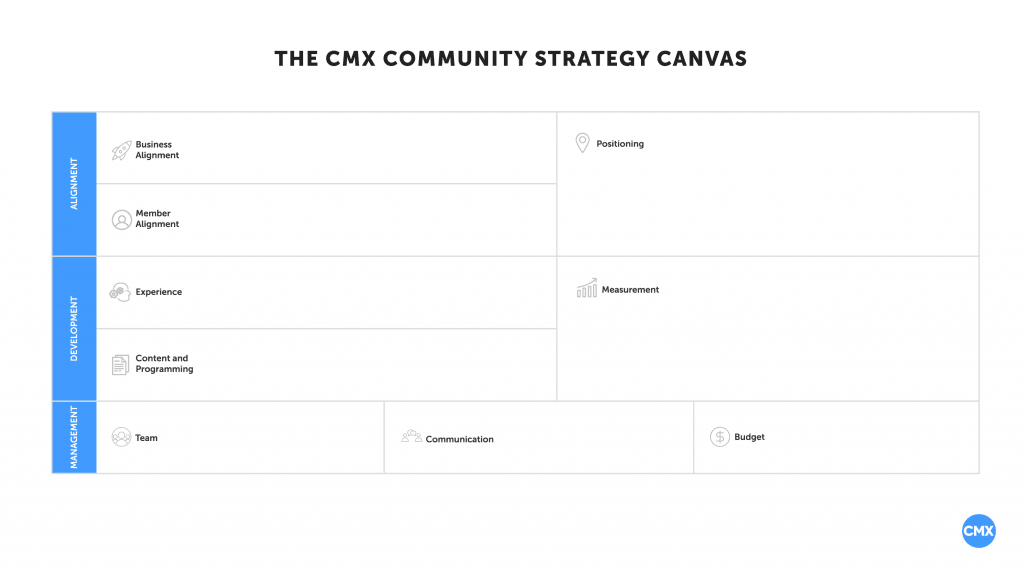
My friend Shira Levine’s “Shiramyd” is super-goofy, but you ain’t gonna forget it.The canvas here is probably the weakest image in this batch; it doesn’t have an acronym or a visual analogy. But it’s still more useful than a bunch of bullet points – it gives shape to a concept.
Although some framing tools can be more effective than others, any sort of frame will be better than simply explaining the concept.
Exercises
The best way to ensure your audience is actually retaining the knowledge you’re sharing is by leading exercises. This might not always be completely possible in a conference setting, but there are a lot of ways you can handle this (in order of increasing complexity);
Asking the audience to repeat a concept you shared (“So, what is PUFF again?”)
Asking an audience member to answer a question using what you just taught them (“Choosing your thesis is part of which section of PUFF?”)
Asking the audience for examples (“What are some examples of framing devices you’ve seen used in a talk?”)
Splitting the audience into groups and having them do the first step of the lesson you’re teaching them (“Take this concept and develop a frame for it”)
It’s important for these sort of projects that you don’t try to have them complete every step of your program/concept – give them an initial step that helps them understand and feel confident about the subject.
Unflappable
Physically Prepared
Presenting can be nerve-wracking. I’ve been on stage many, many times and I can still get nervous. The first step to avoiding this is preparing your body.
One way to do this is develop a ritual that helps you feel more confident. For some people this might be blasting a Beyoncé song. For others it might be doing some jumping jacks. For others it might be deep breaths.
That said, it’s important to remember that stress is actually good for you. It’s your body preparing for action, so don’t stress out when you feel your heart rate increase. It’ll pass once you’re in the groove, so just thank your body and let the adrenaline flow.
Mentally Prepared
Unflappable doesn’t mean inflexible. So you need to be prepared for curveballs, because they will come. And there’s nothing worse than delivering a great talk and then getting skewered in the Q&A. (It’s definitely happened to me!)
Do your presentation for coworkers. Do it for friends. Do it for your mom. Then see what questions they have. You have the Curse of Knowledge. They don’t know what you know, so they’ll undoubtably show you where the gaps in your presentation are or what questions you need to be prepared to answer during Q&A.
Still nervous? Picture the experience. The most nerve-wracking thing is something unexpected, so look at pictures of the stage, find out where the screen is going to be, find out if there’s a slide remote (and get one if they don’t have one) – eliminate all the unknowns you can.
Starting Strong
All the prep in the world won’t help if you start your presentation badly. So prepare yourself for a strong start.
The way you present yourself before you share any information will color how people accept that information. You don’t want to wander on to the stage, staring at the ground, loudly clearing your throat and shuffling through messy handheld notes, and then dive into your presentation without saying hello.
Be confident, whatever that means to you. It might be impossible for you to bound onstage with smiles and handshakes like some speakers. If that’s not you, don’t do it. I like to throw out a goofy joke (something self-deprecating or ridiculous). For you, maybe it’s actually nervous excitement – channeling this into an intentional style is better than awkwardly fighting it. I love Liz Milch’s fun, goofy intro in this CMX Summit talk.
Context is crucial. You need to ensure that your audience understands exactly what it is you’re going to be teaching them. Otherwise, the experience will be like wandering into a biology class in college halfway into the lecture: confusing and pointless.
Set the stage for why people should be listening to you. This doesn’t mean 5 minutes of your bio (please don’t do that), but means touching on your relevant experience and perspective. That latter point is important. Unless you have a really impressive resume, you need to convince them that you are going to be relevant to speak about this topic. So that might be “I’ve been fascinated by this topic and taking notes on it for years” or “I had this special opportunity to discover this unique take”.
You can also drop examples from your work into the lessons you’re teaching, further emphasizing that you actually know this stuff and aren’t making it up.
Lastly, don’t let this section scare you! Screw-ups are ok, and they happen to everyone. Most speakers are nervous. It’s how you handle nervousness, or errors, or unexpected curveballs. If you screw up, move on very quickly or laugh at yourself. Don’t apologize – you’re just making an awkward moment more awkward. If you’re not super-confident onstage, don’t try to overdo it – just make your flaws an endearing part of your presentation. If something breaks, don’t complain about it or point it out, just roll with it.
Practiced
Actual Practice
“Duh, Evan. Of course I need to practice.”
Sure, but there’s practice and then there’s actual practice. Mouthing your talk while flipping through slides on the train is not actual practice.
Instead, you should stand up, speak loudly, hide your speaker notes, and practice as if you were on stage. Then record video of it, and watch it. Then do it again. Yep, it’s gonna be painful.
When you actually practice you’ll suddenly realize sections you added are way too wordy. You’ll realize you don’t know what to do with your hands. Or that you’re staring at the floor. Or that your talk is 10 minutes longer or shorter than it needs to be!
Memorize Beats, Not Lines
One of my favorite speaking tips comes from The Moth. It’s pretty simple: if you memorize (or worse yet, read) lines on stage, you’ll have very little energy and won’t connect with the audience. In a professional setting, it also comes across as a lack of knowledge about the subject. (If you know it, why do you have to memorize the exact lines or read off a piece of paper?) Instead, memorize the beats.
This has an added advantage if you run into any issues. If technical issues crop up, you can continue without your slides. If something unexpected happens (someone drops something loud in the back of the room, you drop the mic, etc), you don’t have to remember exactly what line you were on.
I have a painful, distinct memory of a talk a number of years ago where the presentation computer kept auto-advancing my slides. In fact, you can watch it. I am incredibly awkward until, finally, they just turn off the slides. And then? Suddenly, I’m confident and knowledgable. I had memorized the beats…I was just relying too much on the slides. Your slides should supplement the beats that you know by heart.
Most people think they can’t speak professionally. They have a lot of arguments: I’m not as knowledgable as those people on stage, I’m not as charismatic, I’m not experienced in teaching, I don’t have fancy graphs, etc.
This is all surmountable.
You have some unique thesis that nobody else can present as well as you.
You have your own style you can embrace and polish.
You can frame your learnings with something as simple as an acronym.
You can become a great presenter. You just have to work hard, believe in yourself, and PUFF.


 These days, it’s rare to hear anything but awe when community managers talk about Slack. The common consensus seems to be that Slack is the perfect community platform. This overexcitement worries me because a) it’s not and b) different communities require different types of platforms.